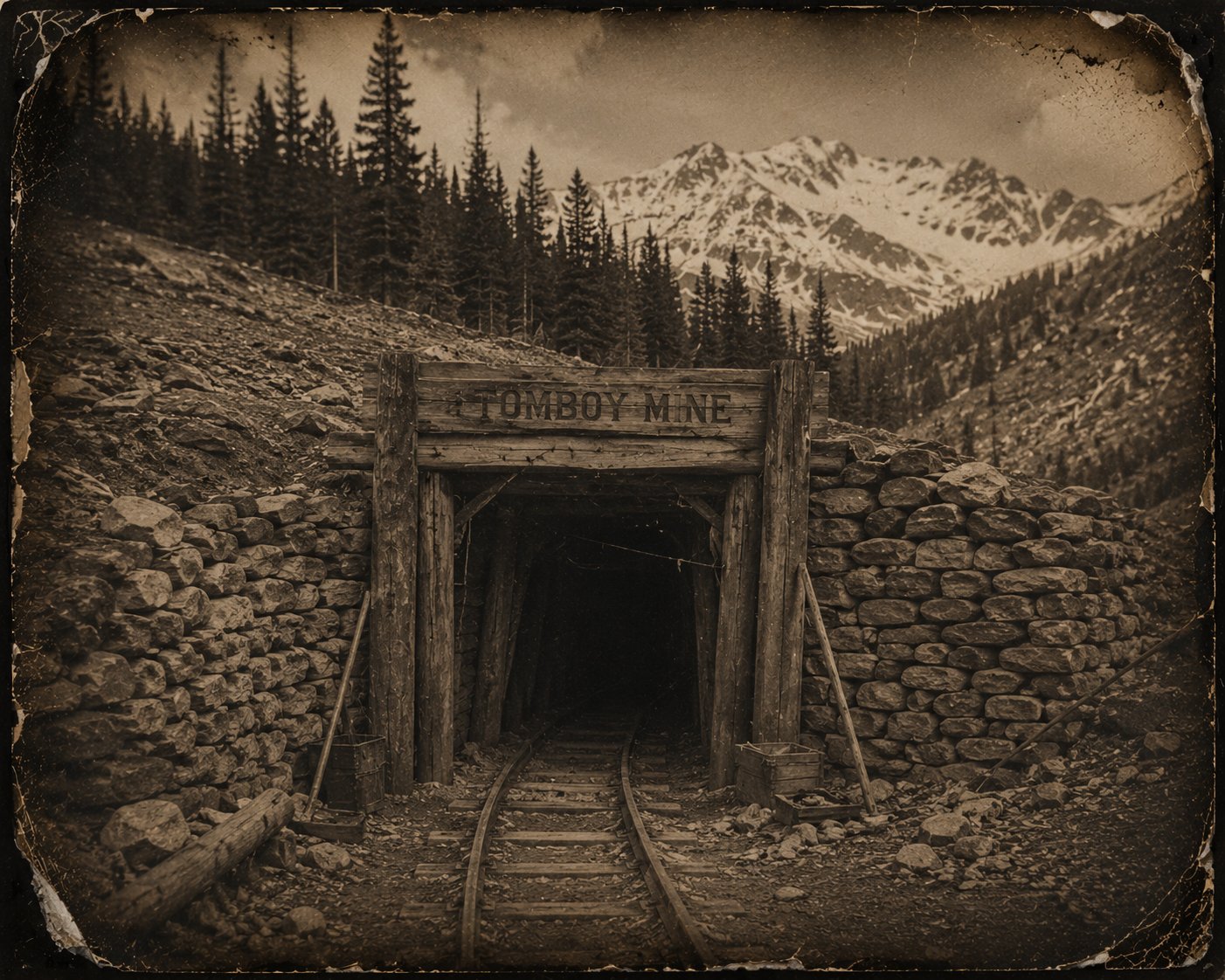
High above Telluride, in a basin locals once called Savage Basin, prospectors struck gold in the 1880s. Within a few years, the claim they staked would become the Tomboy Mine — and the rough camp that grew up around it would become one of the highest, strangest, and most productive mining towns in North America.
A Camp Becomes a Town
The settlement started as little more than a cluster of tents and cabins at roughly 11,500 feet, about two miles east of Telluride and thousands of feet above it. By 1894, the Tomboy Mine was producing significant quantities of ore, and the camp that had been known as Savage Basin took on the mine's own name: Tomboy.
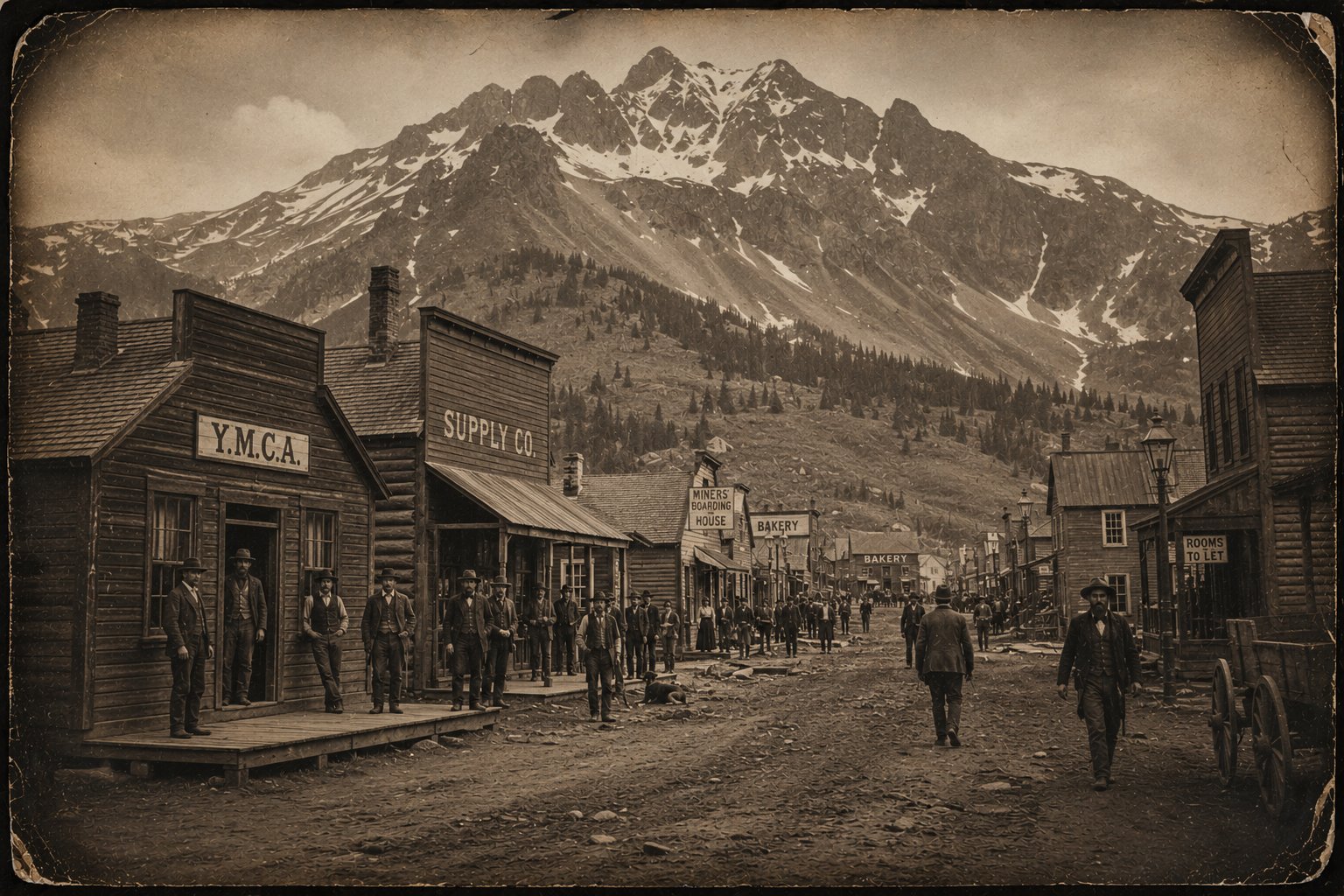
What happened next was unusual for a mining camp at that altitude. Tomboy grew a real town around it — a school, a company store, a stable, rows of miner's cabins, and, improbably, a YMCA, a bowling alley, tennis courts, and a dance club. At its peak, an estimated 900 to 1,000 people called Tomboy home, making it one of the largest alpine mining camps in Colorado history.
Sold to the Rothschilds
The mine's output was significant enough to attract international attention. In 1897, the Tomboy Mine sold to the Rothschilds of London for roughly $2 million — an extraordinary sum for the era, and a signal of just how lucrative the operation had become.
Tomboy was part of a larger story, too. Alongside neighboring mines Pandora, Smuggler-Union, Nellie, and Sheridan, it helped the Telluride mining district produce more than 210 tons of gold by 1959, connected by an estimated 350 miles of tunnels carved into the mountains.
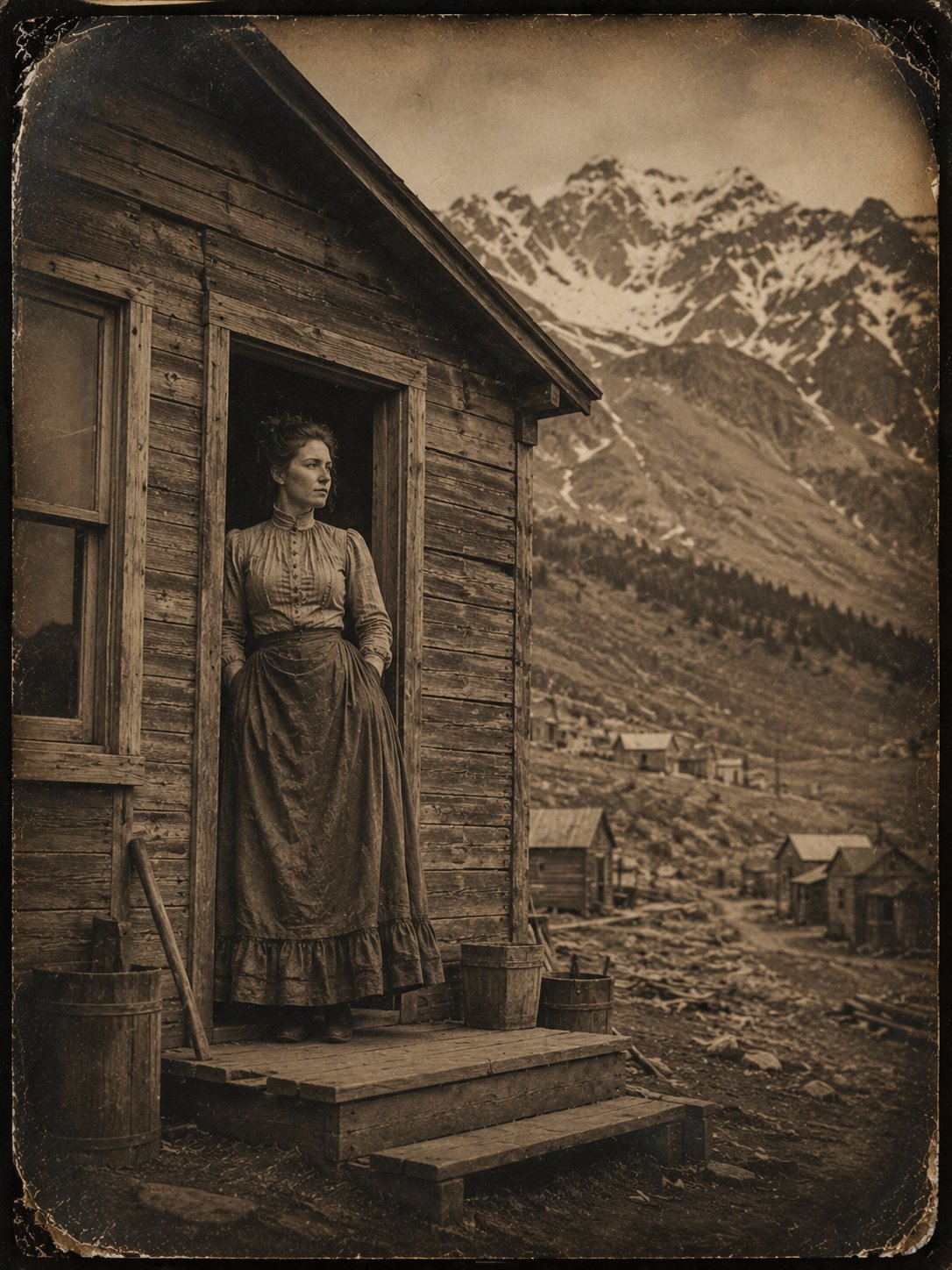
Harriet Fish Backus, wife of a Tomboy mining engineer, documented daily life at the camp in her memoir "The Tomboy Bride" — a rare, human account of what it meant to live at 11,500 feet.
Zinc, Decline, and the Ghost Town
As gold production slowed, Tomboy shifted to milling zinc between roughly 1908 and 1914. But the writing was on the wall: as ore ran out, the mine wound down operations, closing around 1927 to 1928. Remarkably, limited tunnel work continued at the site as late as 1978, long after the town above ground had emptied out.
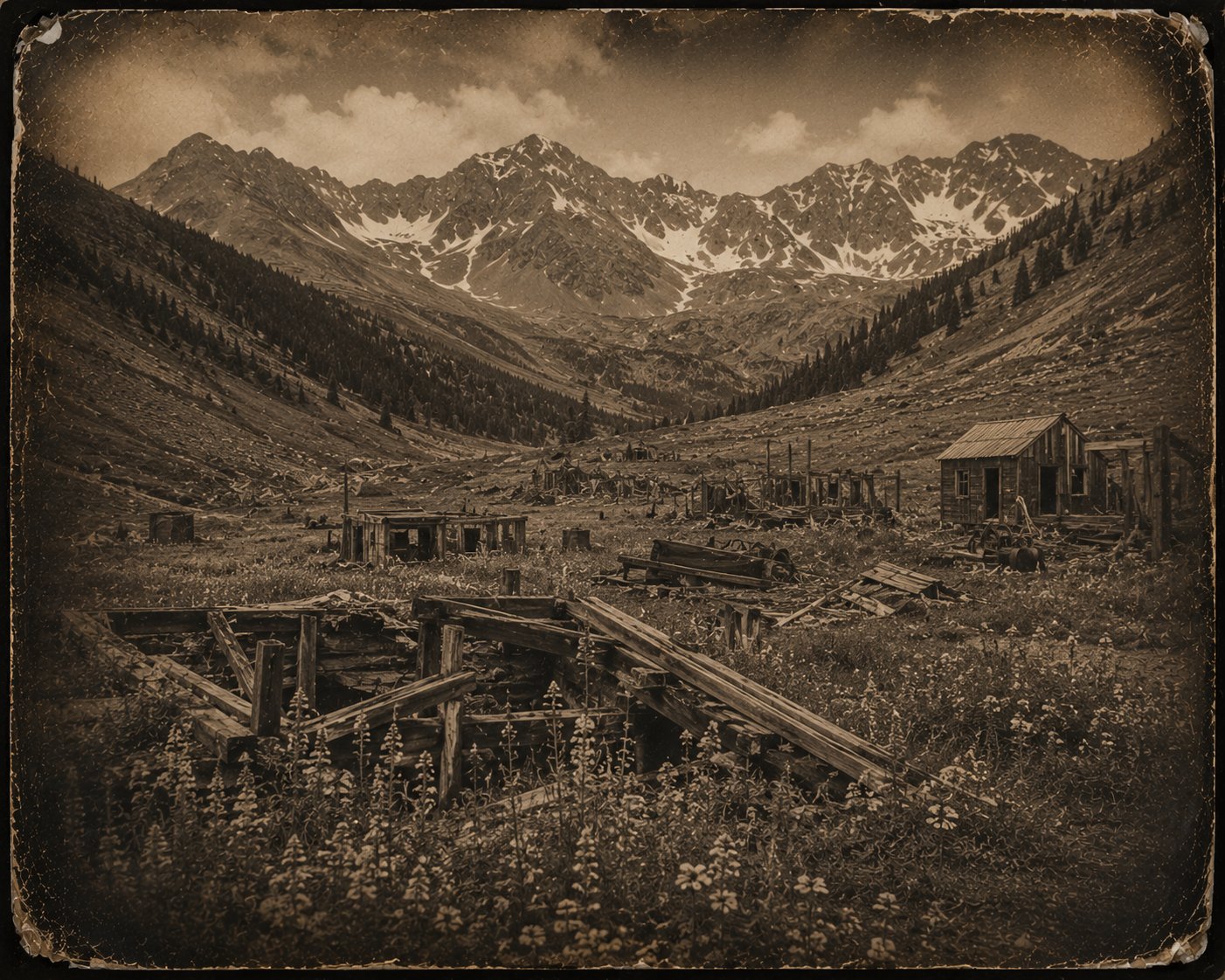
Today, Tomboy is a true ghost town — foundations, scattered structures, and mining relics are what remain, reachable by the same rugged Tomboy Road that once carried ore wagons and mail stagecoaches. Every July and August, wildflowers cover the hillside where a thousand people once lived.
The Name Lives On
Tomboy Tavern carries that name forward — not as a marketing gimmick, but because the story is real, and worth remembering every time a glass gets raised at the base of Lift 4.
← Back to Journal